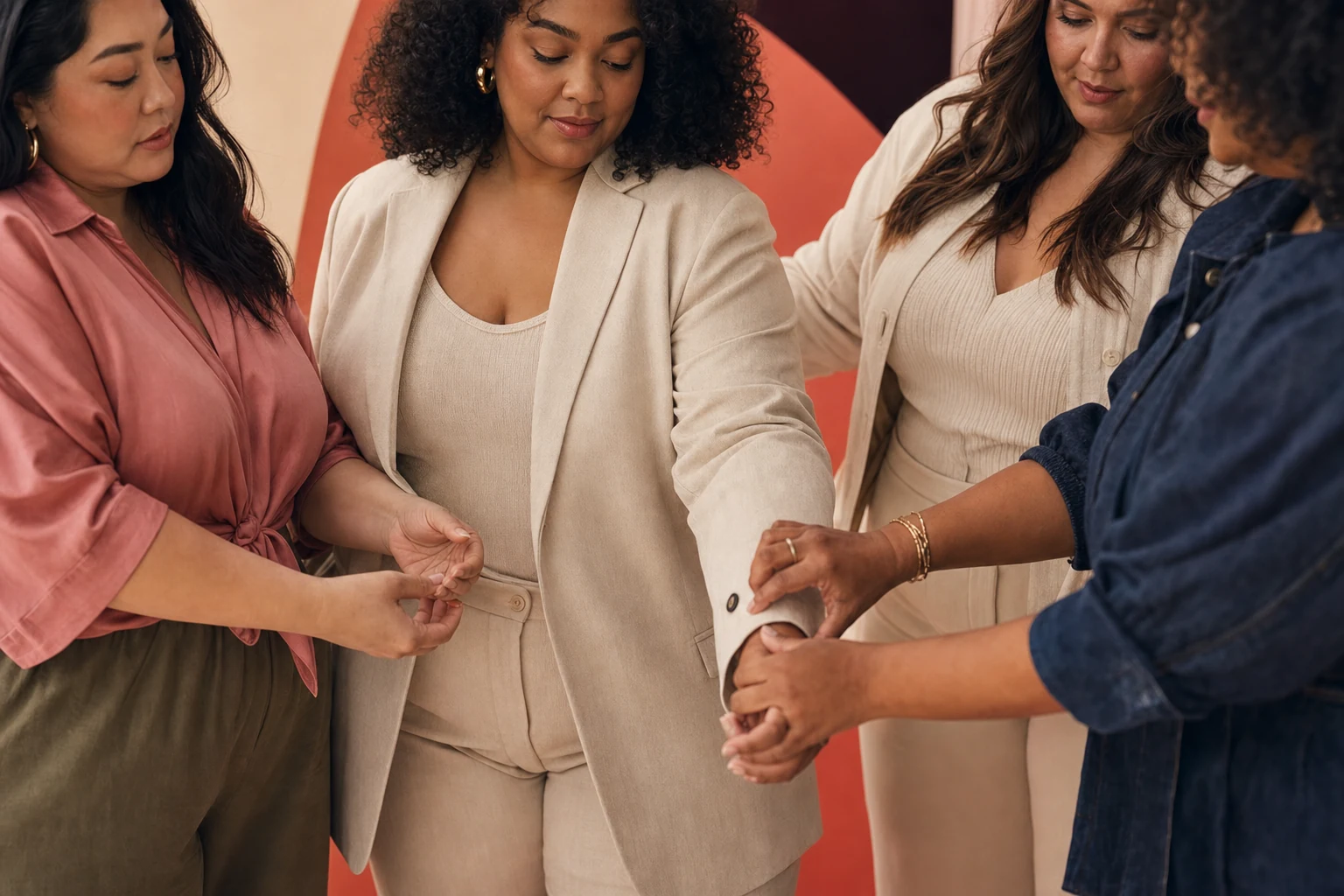
Sustainable fashion took longer to reach plus size than it did straight sizing, but that's changing: more brands are now combining curvy fit with lower-impact materials. Knowing how to actually evaluate a sustainability claim matters more than knowing any specific brand name, since the landscape keeps shifting year to year.
What to look for in a genuinely sustainable brand
Be wary of vague labels like "eco-friendly" with no real detail behind them. Look for specific information about materials (organic cotton, recycled polyester, certified fabrics) and the supply chain, not just generic slogans printed on a hangtag. A brand that publishes where its garments are actually made, and under what labor conditions, is usually further along in its sustainability commitment than one that only talks about fabric.
Certifications worth recognizing
Independent certifications like GOTS for organic textiles or OEKO-TEX for restricted substances give you a more objective signal than marketing language alone. They're not the whole picture, since certification schemes vary in rigor, but a brand that's gone through the process of earning one has at minimum invested real time and cost into the claim, which is worth something.
Material quality lasts longer
Pieces made with quality materials, often tied to more sustainable production, tend to hold their shape longer than fast-fashion pieces made with less controlled materials — an economic advantage on top of an environmental one. A well-made organic cotton tee, for instance, often survives dozens more washes than a cheaper conventional cotton blend before losing its shape or color.
Capsule wardrobes and sustainability go together
Buying fewer, better pieces (the capsule wardrobe approach) is itself a more sustainable choice compared to accumulating cheap pieces that wear out quickly. Pairing a smaller, well-chosen wardrobe with brands that already prioritize durable materials compounds the benefit, since you're buying less often from sources that are already built to last.
Secondhand and resale as part of the picture
Sustainable plus size shopping isn't only about buying new from the right brands — secondhand marketplaces have also become a genuinely useful source for curvy sizing in recent years, as more retailers extend size ranges and resale platforms make specific size and measurement filtering easier than it used to be. It's worth checking resale options before assuming a piece needs to be bought new.
Price versus impact isn't always linear
A higher price doesn't automatically mean a lower environmental impact, and it's worth looking past price as a shortcut. Some higher-priced brands are transparent and genuinely invested in better practices, while others charge a premium without much detail behind it, so the research described above still applies regardless of where a brand sits on price.
Caring for pieces to extend their sustainability
Buying from a sustainable brand is only half the equation — how you care for a garment afterward affects its real environmental footprint too. Washing on cooler cycles, air-drying when possible, and mending small issues like a loose seam or a missing button instead of discarding the piece all extend a garment's useful life well beyond what the label alone accounts for.
Watching for greenwashing in plus size marketing specifically
Because size-inclusive marketing already carries a lot of positive associations, some brands lean on that goodwill to gloss over a weak sustainability record, essentially borrowing credibility from one good decision (extending sizing) to distract from a lack of real investment in materials or labor practices elsewhere. Evaluating the two separately, fit inclusivity and environmental practice, keeps you from assuming one guarantees the other.
Frequently asked questions
Is secondhand shopping actually a reliable option for plus sizes?
It's improved significantly, though selection can still be more limited than in straight sizing depending on the platform. Filtering by specific measurements rather than a size label tends to produce better results.
Do sustainable fabrics perform as well as conventional ones?
In most cases, yes — recycled polyester and organic cotton perform comparably to their conventional counterparts, and in some cases the more careful production process results in a more durable finished fabric.
The bottom line
Sustainable curvy fashion exists and keeps becoming more accessible. The most reliable way to spot it is transparency about materials, certifications, and supply chain, not just the word "eco" in a product description.
Discover sustainable brands in the CurvyIndex sustainable fashion directory.