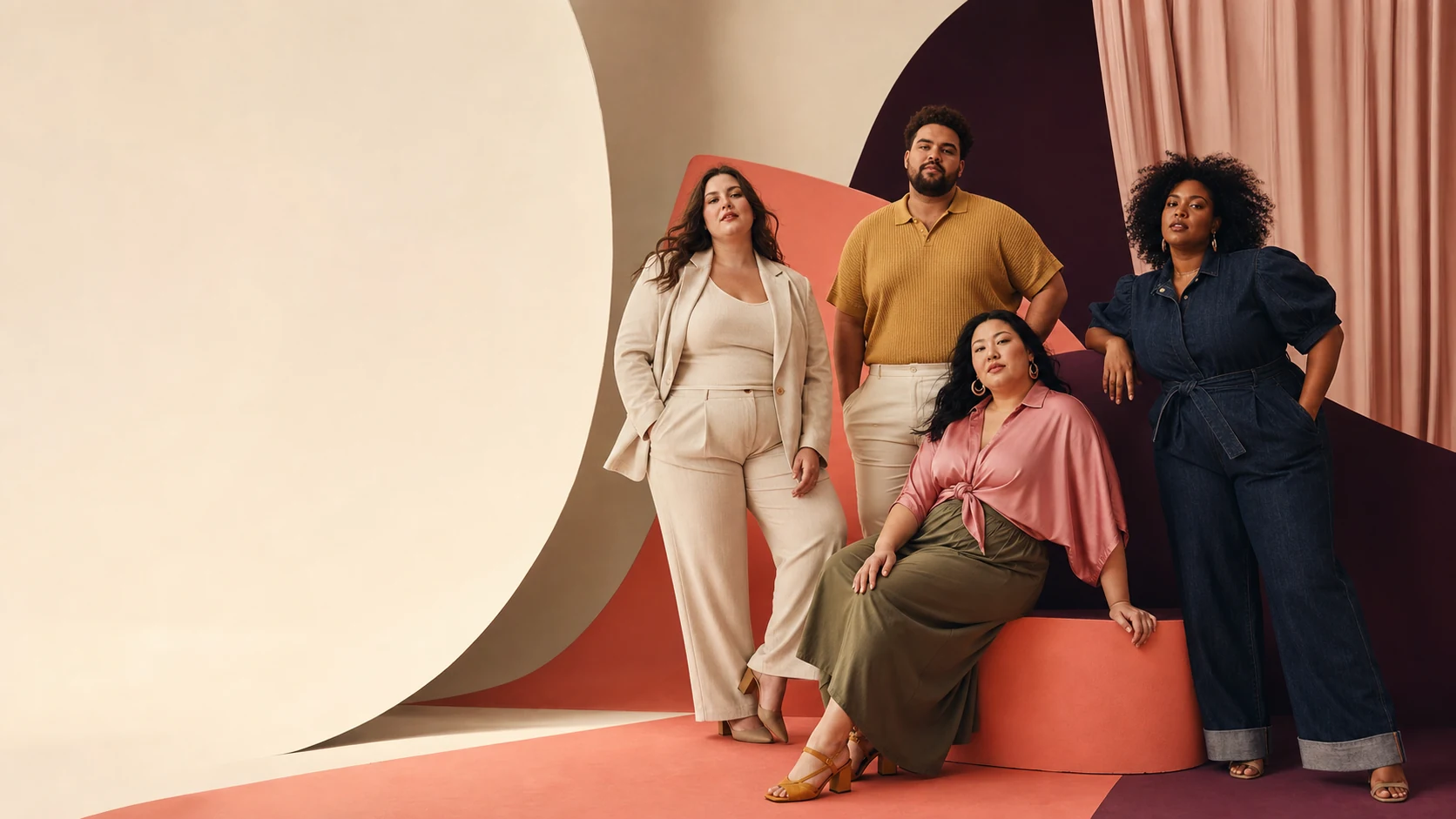
A body that changes every month calls for clothes designed to adapt, not just clothes that are "roomy." Plus size maternity wear has its own specific needs that go beyond simply sizing up a regular maternity line, and knowing what to look for saves a lot of trial and error along the way.
Dedicated stretch panels, not just bigger sizing
The best plus size maternity pieces have dedicated stretch panels (usually at the waist and belly) that expand progressively, rather than simply being wider throughout from the start. A piece that's just cut larger everywhere tends to look shapeless well before it needs to, while a garment with a real stretch panel grows with you and still looks intentional in the early months.
Bust support: it changes faster than you'd think
Your bust often changes size faster than your belly during pregnancy, sometimes within the first trimester. Look for bras and tops with multi-position adjustable bands, so you can adapt without buying new lingerie every few weeks. A bra with several hook positions and adjustable straps buys you more time in the same piece before a full size change becomes necessary.
Soft fabrics against the skin
Skin is often more sensitive during pregnancy, and areas that never bothered you before, like a waistband seam or a rougher blend, can suddenly become irritating. Look for cotton or modal blends with good stretch, avoiding rigid synthetics that can irritate in later months when the skin is already stretched and more reactive than usual.
Layering pieces that work across trimesters
Rather than buying an entirely new wardrobe for each trimester, a few well-chosen layering pieces, like an open cardigan or an adjustable wrap top, can be styled differently as your body changes shape. This approach tends to be both more budget-friendly and more sustainable than replacing most of the wardrobe every few months.
Footwear needs shift too
Swelling in the feet and ankles is common, especially later in pregnancy, which makes a shoe with some adjustability, like a strap or lace rather than a fixed slip-on, more comfortable through the day. A slightly lower heel than you'd normally wear also helps with the shift in balance that comes with a changing center of gravity.
Pieces that still work after birth
Many maternity pieces with front nursing access remain useful in the first months postpartum too — an investment that pays off longer than it seems at first, especially for nursing tops and dresses that double as comfortable everyday wear during a period when getting dressed quickly matters more than usual.
Shopping in trimesters, not all at once
Buying the entire maternity wardrobe in one go early in the pregnancy often means guessing sizes for a body that hasn't finished changing yet. Shopping in stages, buying a bit more as each trimester begins, tends to produce a better-fitting wardrobe overall and spreads the cost out more manageably too.
Regular plus size pieces that double as maternity wear
Not every piece needs a maternity label to work during pregnancy: an oversized button-down, a wrap dress with an adjustable tie, or a stretchy A-line dress from your existing wardrobe can often carry you comfortably through the first two trimesters without any dedicated maternity purchase at all. Recognizing which of your current pieces already have enough built-in flexibility can meaningfully cut down on how much needs to be bought new.
Comfort during the postpartum recovery period
The weeks immediately after birth call for a slightly different set of priorities than pregnancy itself: soft, stretchy waistbands that don't press on a healing abdomen, and tops that allow easy access for nursing or pumping if that's part of your routine, matter more than how "put together" an outfit looks. A few oversized, ultra-soft basics kept specifically for this period tend to get more wear than expected.
Frequently asked questions
Do I need to buy maternity-specific bottoms right away?
Not necessarily in the first trimester. Many people extend their regular bottoms with a belly band before transitioning to dedicated maternity styles as the belly grows further.
Is it worth investing in higher-quality maternity basics?
Often yes, particularly for leggings and bras worn daily, since the stretch and support quality directly affects comfort over months of continuous wear, more so than in a typical wardrobe piece worn only occasionally.
The bottom line
The best plus size maternity clothes stand out through dedicated stretch panels, adjustable bust support, soft fabrics, and pieces flexible enough to carry you from one trimester into the next. It's not just about a bigger size — it's about garments designed to move with the change, month after month.
Discover maternity pieces in the CurvyIndex directory.