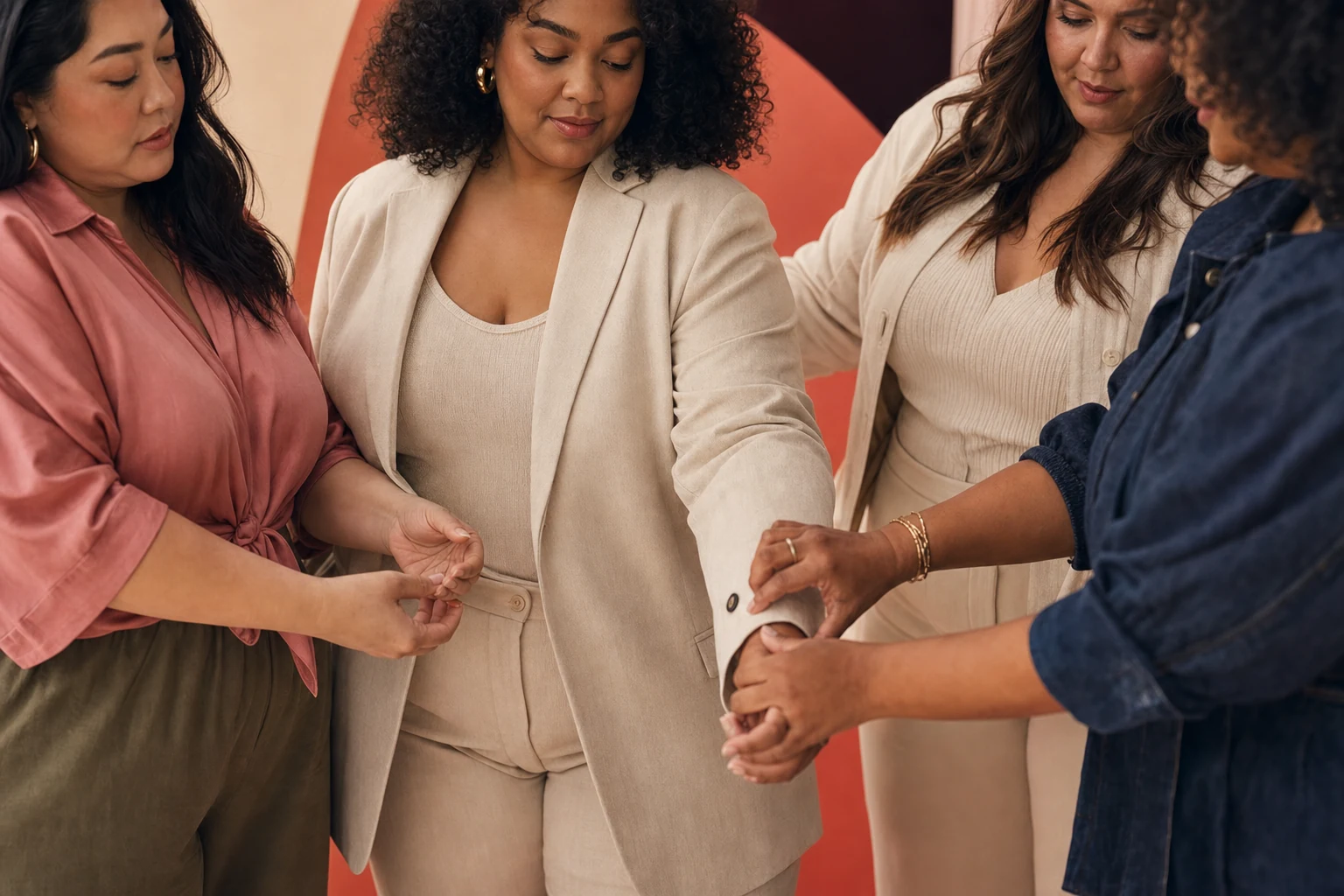
Confidence in an outfit doesn't come from following the trend of the moment — it comes from knowing exactly why you chose what you're wearing. Trends come and go on a schedule set by algorithms and marketing calendars, but the outfits that actually make you feel like yourself tend to follow a much more personal, consistent logic.
Identify the pieces that feel like "you"
Look through your closet and notice which pieces you reach for without a second thought, the ones you put on and immediately forget about because they simply feel right. They probably share something in common — a color, a cut, a fabric, a level of structure — that you can use as a guide for future purchases instead of starting from scratch every season.
Invest in what you actually wear often, not what would "impress"
The pieces that give you the most everyday confidence are usually the simple, well-made ones, not the flashiest. That's where it's worth putting most of your budget, rather than chasing a statement piece that photographs well but sits unworn in the closet because it never quite matches how you actually want to feel day to day.
Ignore the rules that don't convince you
If a styling rule ("don't wear horizontal stripes," "avoid white in winter") doesn't convince you or doesn't match what you like seeing in the mirror, you can simply ignore it. There's no fashion court judging your choices, and most of these rules were never based on anything more solid than outdated convention in the first place.
Give yourself time to experiment
Confidence with a new piece often shows up the second or third time you wear it, not the first. Try new styles in low-stakes settings (a quiet evening, a weekend errand) before you judge them in a high-pressure situation, since first impressions of a new silhouette are often shaped more by unfamiliarity than by how the piece actually looks on you.
Notice how your mood shifts with certain outfits
Pay attention to the days you feel unusually good and trace it back to what you're wearing — sometimes it's a specific color, sometimes it's simply a piece that fits exactly right. Building a mental list of these small, specific triggers over time gives you a much more reliable style compass than any seasonal trend report.
Let your style evolve without needing to justify it
What made you feel confident five years ago might not be what makes you feel confident today, and that's completely normal — bodies change, tastes change, contexts change. You don't owe anyone, including your past self, a consistent aesthetic across every year of your life.
Separate confidence from other people's opinions
It's worth remembering that dressing with confidence is ultimately about your own relationship with what you're wearing, not a performance judged by outside opinion. A piece that draws a compliment but makes you feel exposed or uncomfortable isn't actually a confident choice, no matter how it reads to someone else.
Using trends selectively instead of rejecting them entirely
None of this means ignoring trends altogether — a current color or silhouette can absolutely be incorporated if it genuinely appeals to you, the key is choosing it because you like it, not because skipping it feels like falling behind. Testing a trend through a low-cost accessory before committing to a full-price garment is a practical way to explore it without the pressure of a big investment in something you're not sure about yet.
Building a short list of personal style rules that actually help
Rather than following generic style advice, it can help to write down three or four rules that are specific to you, something like "I feel best in structured shoulders" or "I avoid anything with a tight waistband," based on your own pattern of what's worked. A personal shortlist like this is far more useful when shopping than any generic seasonal guide, since it's built entirely from your own evidence.
Frequently asked questions
Is it normal for personal style to feel inconsistent while you're figuring it out?
Yes, completely. Most people go through a period of trying different things before landing on a set of pieces and colors that consistently feel right, and that process can take longer than it seems like it should.
How do I stop caring about what others think of my outfit choices?
It rarely happens all at once, but consistently choosing the outfit that feels right to you, even in small low-stakes moments, tends to build that confidence gradually over time.
The bottom line
Dressing with confidence is more about self-knowledge than trends: understand what makes you feel good, invest there, and let go of the rules and outside opinions that don't represent you.
Discover pieces for your style in the CurvyIndex directory, or read the full body positivity and style guide.