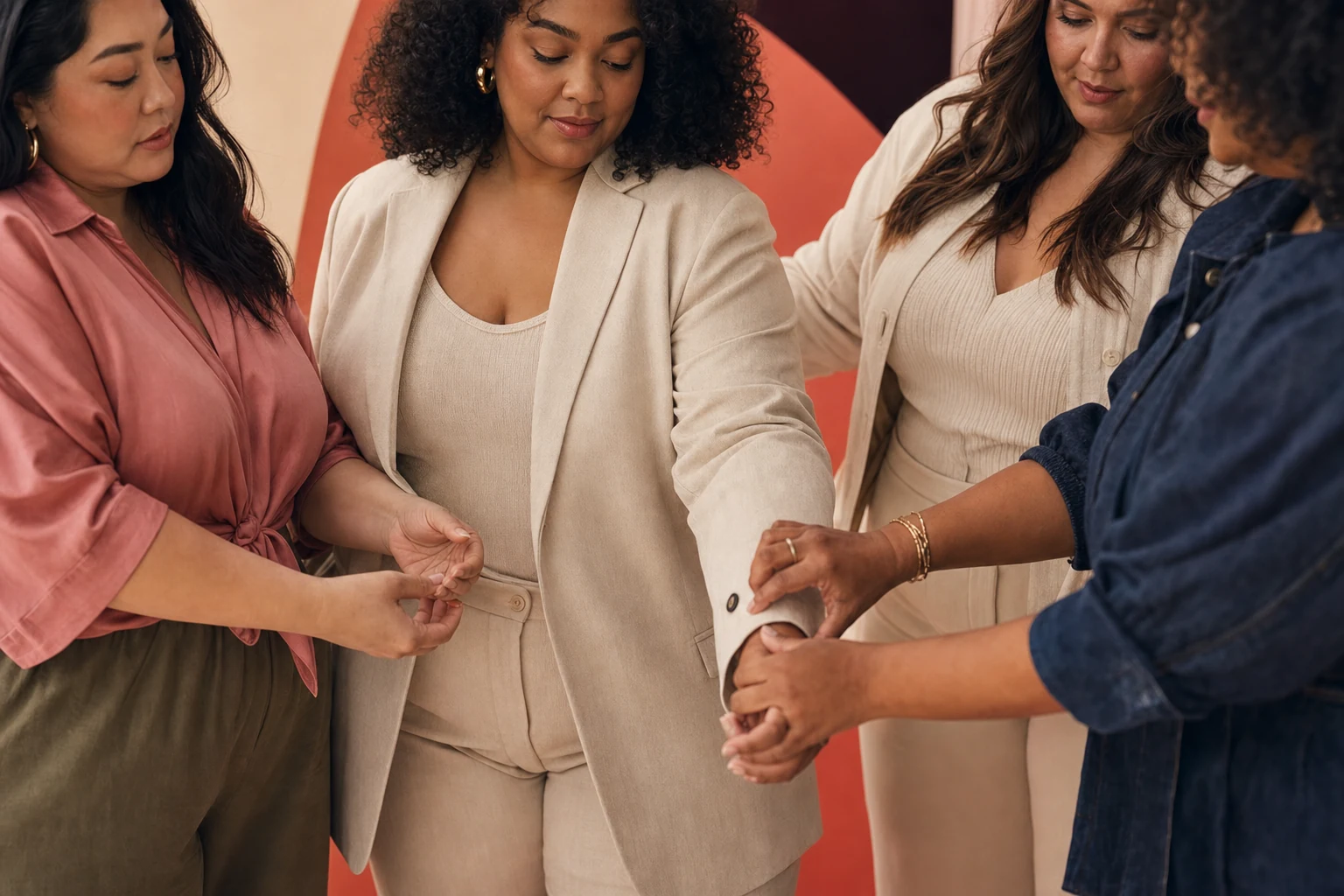
Over the last few years, more brands in the US and UK have invested seriously in plus size, moving beyond simply scaling up straight-size patterns to designing dedicated fits. Telling the difference between a brand that's genuinely done the work and one that's just added a size run to an existing pattern takes a bit of practical know-how.
What sets a genuinely plus size-focused brand apart
A good indicator is a detailed size chart with multiple measurements (not just a generic size label), paired with clear information about fabric composition and the specific fit of each piece. Brands that publish garment measurements in inches or centimeters, rather than only a size number, are usually the ones that have actually fitted the pattern on plus size bodies during development rather than guessing.
Extended size ranges: check the real numbers
Always check the actual size range a brand offers: some stop just past standard sizing, others go much further, sometimes doubling or tripling the range. It's an easy detail to verify before falling in love with a piece you might not find in your size, and it's worth checking every time rather than assuming based on a brand's general reputation, since ranges shift between collections.
Fit reviews matter more than the photos
Reviews that mention actual measurements and a fit verdict tell you far more than polished campaign photography. Look for brands that make this kind of feedback visible and easy to find, ideally filterable by body type or size, since a review from someone with a very different proportion than yours is less useful than one from a similar shape.
Pattern grading is where most brands actually fail
The technical term for adjusting a pattern across sizes is grading, and it's where a lot of otherwise well-intentioned brands fall short: a straight-size pattern graded up mechanically often loses proportion at the shoulders, bust, and rise, ending up boxy rather than fitted. Brands that grade separately for plus sizes, rather than extrapolating from a straight-size block, tend to produce noticeably better results, and it's often mentioned explicitly in their brand story or size guide if they've done this work.
Return policies signal confidence in fit
A brand that offers a generous, low-friction return window is implicitly telling you it expects most orders to fit reasonably well the first time, or it's comfortable absorbing the cost when they don't. A restrictive or expensive return policy, on the other hand, can be a signal that the brand knows its fit is inconsistent and would rather discourage returns than fix the underlying pattern issue.
Price point isn't a reliable quality signal on its own
It's tempting to assume a higher price automatically means better construction, but that's not always true in plus size specifically — some higher-priced brands still use a poorly graded pattern, while some mid-range ones have invested heavily in fit testing precisely because they know it's their main differentiator. Judging a brand by its size chart detail and review quality is a more reliable filter than judging it by price alone.
Customer service as a hidden quality signal
How a brand handles a sizing question or an exchange request before you've even bought anything tells you a lot about how it will treat you as a customer afterward. A brand with responsive, knowledgeable support that can answer specific fit questions is generally more invested in getting your purchase right than one that only offers generic, templated replies.
Checking how a brand markets its plus size range
Look at whether plus size is treated as an integrated part of the main collection, using the same campaign imagery and models across all sizes, or whether it's segregated into a separate, smaller "plus" section with different photography and less selection. The former is usually a stronger signal of a brand that considers plus size customers core to its business rather than an afterthought.
Frequently asked questions
Should I trust influencer reviews over customer reviews?
Influencer content can be useful for seeing a piece in motion, but gifted items and sponsored posts aren't always representative of the true fit experience, so weighing them alongside unpaid customer reviews gives a more balanced picture.
Is it worth ordering from a brand with no plus size reviews yet?
It carries more risk, but checking the brand's general grading practices and return policy first can help you judge whether it's worth trying, especially if the size chart itself looks detailed and well thought out.
The bottom line
The best plus size fashion brands stand out through transparent size charts, genuinely extended size ranges, careful pattern grading, and visible fit reviews — not simply through marketing language that says "inclusive" without backing it up with the technical details that actually determine how a garment fits your body.
Discover a curated selection in the CurvyIndex fashion brands directory.