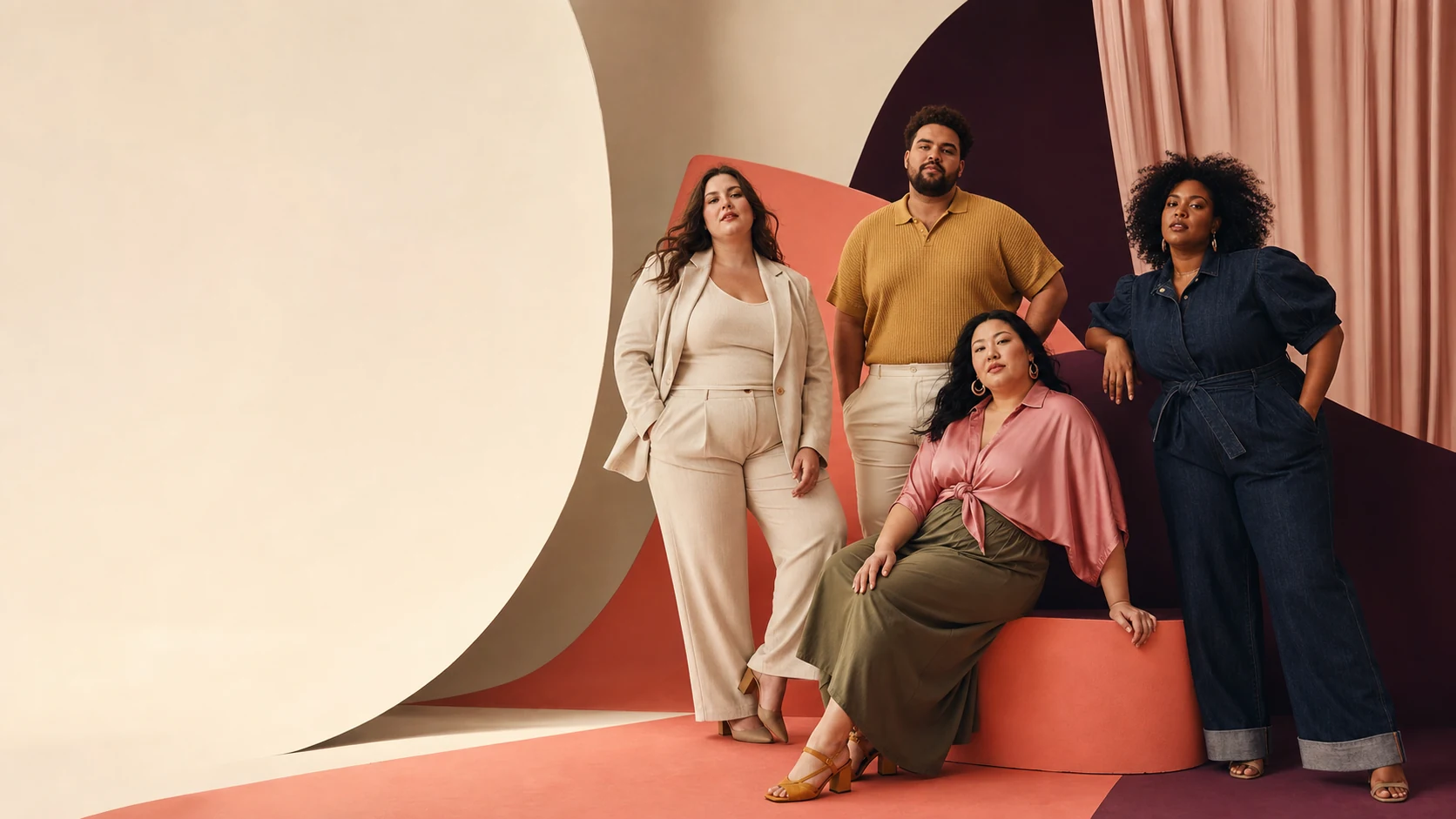
A website can call itself inclusive while offering only three items in its highest size. To choose a plus-size online shop well, pay less attention to slogans and more attention to data.
Start with the chart, not the printed number
Look for bust, waist and hip measurements. If a shop uses only S, M, L and XL without centimetres or inches, the risk of error increases.
Check whether one guide covers the whole label or only a line. On marketplaces, every seller may use a different system.
- Measure with the tape parallel to the floor.
- Compare with garment measurements when available.
- Check fabric composition and stretch.
Make sure the size really exists
A size appearing in a filter does not guarantee available products. Apply the size before choosing a style and see how many categories remain genuinely shoppable.
A brand reaching a high size in one T-shirt does not offer the same coverage as one producing denim, outerwear, lingerie and occasionwear across that range.
Read the return policy and total cost
Before ordering, check return cost, return country, deadlines and exclusions for lingerie, swimwear or sale items.
For non-EU purchases, consider VAT, duties and handling fees. A low initial price may stop being good value when international returns are paid by the customer.
Use reviews intelligently
Useful reviews include the purchased size, body measurements, height, fabric and where the garment feels tight or loose. Be cautious with comments that never describe the actual item.
The best shop is not the one with the most inclusive campaign. It is the one that helps you understand what will arrive before you pay.