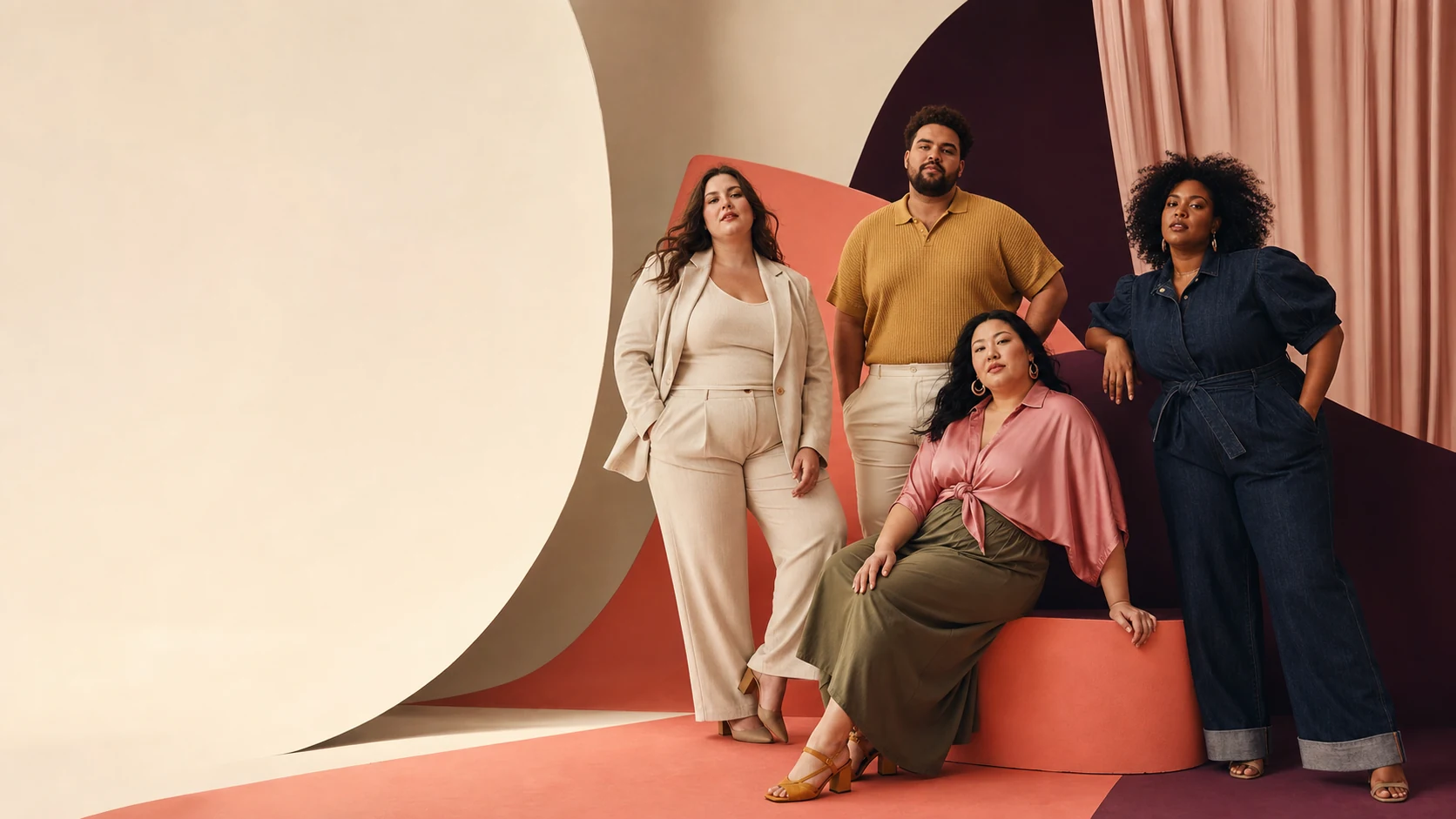
Have you ever ordered a size 18 from one store and a size 22 from another, only to have both fit completely differently? That's not you doing something wrong — it's the plus size industry still not agreeing on a shared standard. Every brand builds its own chart, and that makes online shopping feel like a gamble if you don't know how to navigate it.
This guide gives you the tools to shop with more confidence: how to take accurate measurements, how to read a size chart properly, and how to spot the brands that actually designed for curvy bodies instead of simply scaling up a straight-size pattern.
Why plus size charts aren't all the same
When a garment is designed only around straight sizes and then "scaled up," the result often ignores how proportions between waist, hips and bust actually shift on a curvy body. A brand that takes plus size seriously redesigns the pattern itself — moving darts, adjusting armhole depth, changing how the fabric falls.
That's why two garments labeled the same size can fit in completely different ways. It's not about "what size you wear" — it's about how that specific brand built that specific garment.
How to measure yourself correctly (in 10 minutes, on your own)
All you need is a soft tape measure and a mirror. Here's what to measure:
- Bust: tape measure across the fullest part of your bust, parallel to the floor, without pulling tight.
- Underbust: right below the bust, especially useful for bras.
- Waist: at the narrowest point of your torso, usually just above the belly button.
- Hips: at the widest point of your hips and glutes, typically 7-8 inches below the waist.
- Inseam: from the crotch to the ankle, useful for trousers and jeans.
Write these numbers down somewhere you can find again — they're your personal compass, valid across any store you shop, far more reliable than "the size you usually wear."
How to read a size chart without losing your mind
Before choosing a size on a product page, always look for that brand's specific size chart (not the site's generic one, if they differ). Compare your measurements to the numbers in the chart, not to the letter. An "XL" can mean completely different measurements from one brand to another.
If your measurements fall between two sizes, look at the garment's fit: a fitted or bodycon style usually works better sized up, while a relaxed or oversized style can go with the smaller of the two.
Signals that a brand actually designed for plus size
A few clues help you judge a store before you even place an order:
- It offers a size chart with multiple measurements (not just bust, but separate waist and hip numbers).
- It shows photos or videos of models with genuinely different body shapes, not just borderline sizes.
- Reviews include fit details ("true to size," "runs small, order one size up").
- Its size range extends well beyond a standard XL, not just barely past it.
These details tell you more about whether a brand actually invested time in curvy fit than any polished product photo ever will.
What to do when the size is still wrong
Even following all these steps, sometimes a garment still won't fit as expected — that's normal, and it's not on you. Before ordering, always check the store's exchange and return policy: timelines, who pays for return shipping, whether refunds are cash or store credit. That single piece of information will save you more frustration than any size chart.
The bottom line
Your body measurements are an objective fact that stays valid everywhere you shop; the size printed on the label changes meaning from brand to brand. Trust the inches more than the letters, always check the product-specific size chart, and choose stores that prove, through actual details, that they designed for bodies like yours.
In the CurvyIndex directory you'll find stores already vetted on exactly this: size chart transparency, measurement detail, and clear return policies.
Read next: